
Moline Epoxy Flooring grinds and finishes polished concrete floors in Moline, IL, serving surrounding cities including Silvis, Milan, Rock Island, Campbell’s Island and Bettendorf. With more than 20 years of work on concrete slabs, we know that the floor you end up with depends on what the slab can give, and we show you that before you commit.
Polished concrete has no coating to peel, chip or yellow. The slab is ground in stages with diamond tooling, hardened with a densifier and polished to the sheen you choose, which makes it popular in shops, stores, offices and finished basements where a coating would take a beating.
Every proposal names the cut level, the densifier, the final grit and the target sheen. That way you can compare what we are offering with another bid on the same terms, and check the finished floor against what was written.
How Polished Concrete Is Made
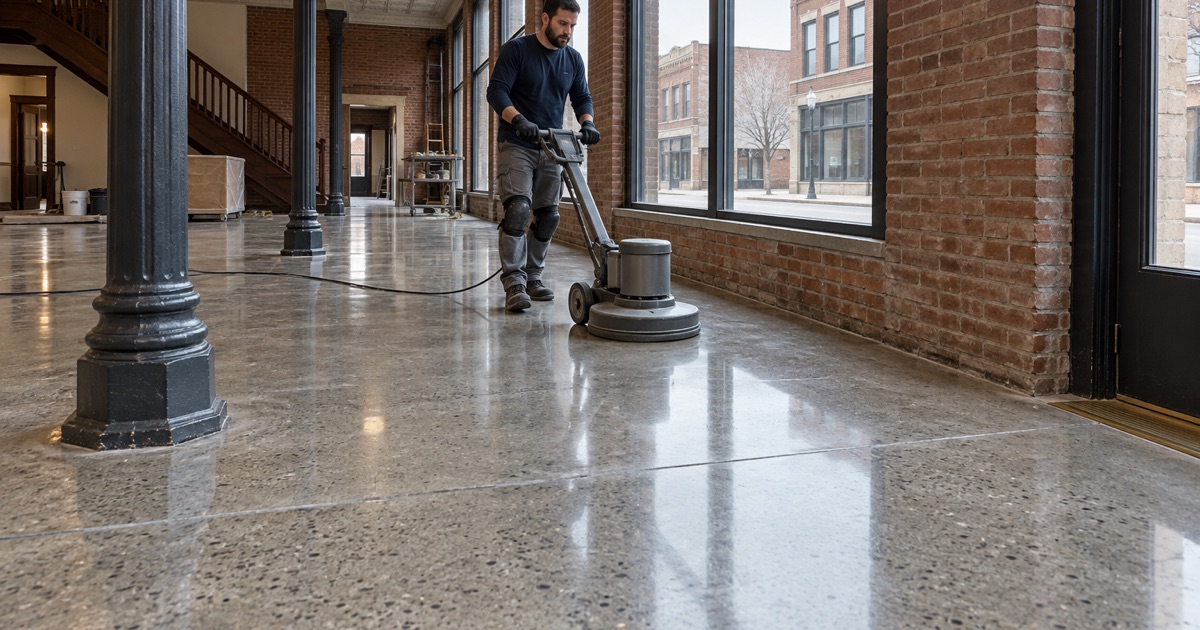
Opening the Slab With Diamond Tooling
The process starts with metal-bonded diamond tooling on a heavy grinder that removes the top skin of the concrete, along with sealers, glue and stains. How deep that first cut goes decides what the floor looks like at the end, from a smooth cream finish to exposed stone.
Our grinders run with dust-collecting vacuums, so the dust is captured at the machine and not rinsed toward a floor drain. That keeps the building clean and keeps concrete fines out of drains and storm inlets.
Densifying the Surface
After the early grinding passes, we apply a lithium silicate densifier. It reacts with the concrete to harden the surface, which lets it take a higher polish and makes it more resistant to wear and dusting.
Densifier is not a coating. It soaks into the slab rather than sitting on top of it, which is why a polished floor does not peel the way a film does.
Honing and Polishing to a Sheen
With the slab hardened, we move through progressively finer resin-bonded diamonds. Each pass refines the scratch pattern left by the last, and the final grit sets the sheen, from a flat honed look to a high reflective gloss.
A guard or stain protector is often applied at the end to help the floor resist spills. It is thin, but in kitchens, break rooms and retail it gives you time to wipe up oil and drinks before they soak in.
Choosing the Look
Cream, Salt and Pepper or Exposed Aggregate
A cream finish keeps the smooth top layer of the slab with little stone showing. A salt and pepper finish cuts just deep enough to reveal fine sand. A deep cut exposes the larger stone aggregate for a terrazzo-like look.
Every slab is mixed and placed differently, so the amount of stone near the surface varies across the same floor. When the look matters, we grind a sample area first so the decision is made on your concrete and not a catalog photo.
Sheen Levels
Higher sheens reflect more light, which brightens warehouses and showrooms and can reduce the lighting a space needs. Lower sheens hide scratches and footprints better and read as more relaxed in a home.
We help you match the sheen to the traffic. A busy shop floor with grit tracked in will dull a mirror finish faster, so a satin level often looks better for longer in that kind of space.
Dyes and Saw Cut Patterns
Concrete dyes can be applied during the polishing sequence to add color, from soft earth tones to deeper shades. Saw cuts can divide the floor into panels, borders or simple patterns, and existing control joints can be filled for a cleaner look.
Dye color reads differently on every slab because the concrete underneath is part of the result. We test dye colors on your floor before committing to a full room.
Guards and Stain Protection
A finished polished floor is dense, but it is still concrete, and oil, wine, coffee and acidic cleaners can mark it if they sit. A penetrating guard applied after the final polish slows that down and gives you time to clean a spill before it stains.
Guards wear with traffic and can be renewed with a burnishing machine. We tell you which guard went down and how often a space like yours is likely to need it refreshed.
Commercial and Residential Polished Floors
Shops, Warehouses and Retail
In commercial buildings, polished concrete is valued because it handles forklifts, carts and foot traffic without a coating to wear through. It is easy to keep clean with an auto-scrubber, and a densified surface sheds far less concrete dust than a bare slab.
We phase commercial jobs by zone and schedule grinding overnight or on weekends when a store or shop has to stay open. Older storefronts in Moline Centre often hide old tile and adhesive layers, and those come off in the first grinding passes.
Offices, Clinics and Showrooms
Offices and showrooms often choose a polished floor for its clean, modern look and low upkeep. Clinics like that it cleans without waxing or stripping, which keeps maintenance chemicals to a minimum. We plan these jobs around occupancy, sealing work areas with plastic and running the dustiest passes when the space is empty.
Basements and Living Spaces
In a home, polished concrete turns a basement slab into a finished floor with no coating to lift. Many of Moline’s homes date from before 1980, so their basement slabs often carry paint, patching and tile mastic that the grinding has to remove first.
Polishing does not stop water. We look for signs of past seepage, check the floor drain and any sump pit, and tell you in writing that the finish is not waterproofing or radon work.
What Affects the Result and the Price
The Condition of the Slab
Cracks, spalls, old patches and soft concrete all show in a polished floor because there is no coating to hide them. We map them before quoting and fill what can be filled, but some repairs will remain visible, and we tell you so before you decide.
Some customers like the character that old patches and filled cracks give a polished floor, especially in shops and older commercial spaces. Others want a uniform look, and for them a coating may be the better answer. We would rather point that out before grinding than after.
Cut Depth and Grit Sequence
A deeper cut and a higher final sheen mean more grinding passes, more tooling and more time. A cream finish with a satin sheen is usually the most economical, while full aggregate exposure to a high gloss is the most involved.
The proposal spells out the cut level and the final grit, so two bids can be compared directly. A quote that says only polished concrete leaves both of those open, and they are where most of the price difference hides.
Access, Size and Scheduling
Open floors with good access go quickly. Small rooms, edges, columns and furniture take hand tools and more time. After-hours work on an occupied building also adds to the schedule, and we list each of these factors in the proposal so the price is explained, not just stated.
Polished Concrete Versus a Coating
Polished concrete wins where traffic is heavy and nobody wants to recoat, because there is no film to wear through. It is also a good fit where a coating would be at risk from moisture, since vapor can pass through a polished slab without pushing anything off.
A coating wins where the slab is badly damaged, where chemical resistance matters or where you want color and texture the concrete cannot give. We will tell you which way your floor leans once we have seen and tested it.
- 20+ Years on Concrete Floors
- Moisture Tested Before Pricing
- Diamond Ground, Never Acid Etched