Moline Epoxy Flooring installs commercial epoxy flooring in Moline, IL, serving surrounding cities including Silvis, Milan, Rock Island, Campbell’s Island and Bettendorf. Over 20 years, we have coated floors in stores, offices, clinics, service bays and older commercial buildings, and we know the floor is only half the job; the other half is keeping the business running while we work.
Commercial floors take foot traffic, carts, rolling equipment, cleaning chemicals and spills every day. A well-built epoxy system gives a seamless, cleanable surface that looks finished and handles that use for years.
Every proposal lists the product line, the coats, the finished thickness and the phasing plan. You can check the finished floor against the paper, and plan your business around dates that are written down.
Commercial Spaces We Coat
Retail Stores and Storefronts
Retail floors need to look good and clean quickly. Solid color and flake epoxy floors, sealed with a UV-stable topcoat, hold their color under storefront sunlight and stand up to carts and foot traffic.
Older storefronts in Moline Centre and other commercial blocks often carry layers of old tile, adhesive and patching. We grind those away to sound concrete before any new floor goes down.
Offices, Clinics and Showrooms
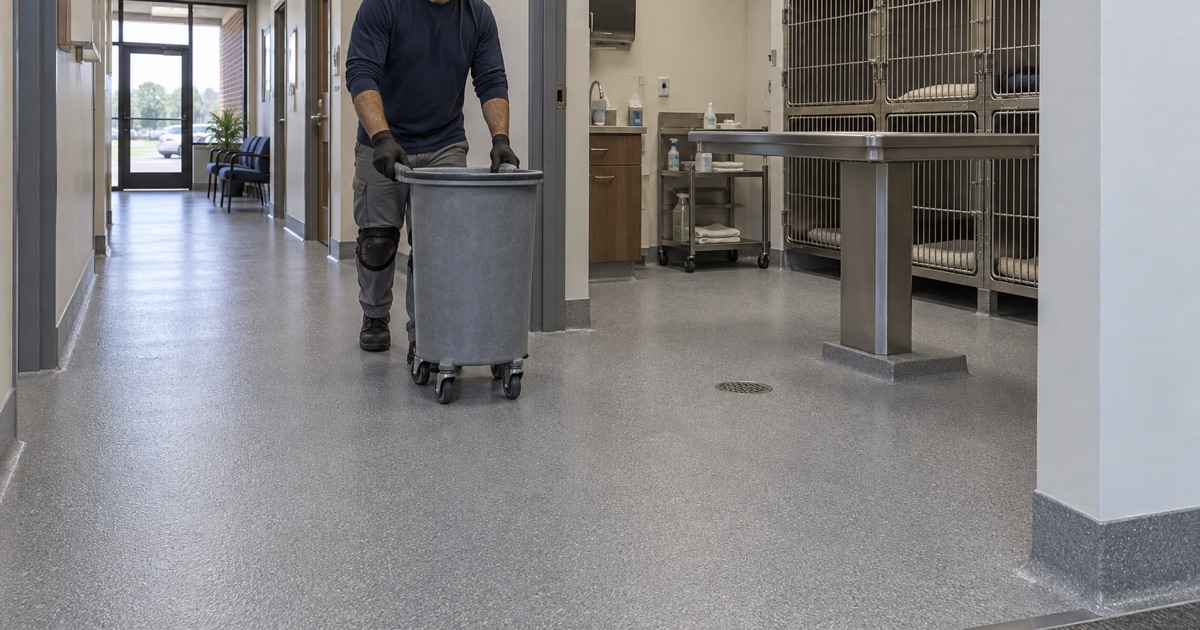
Offices and clinics need durable floors that are easy to keep sanitary. Seamless epoxy has no grout lines to trap dirt, and it handles rolling chairs, carts and frequent cleaning.
Showrooms often choose decorative systems such as metallic epoxy or polished concrete to make the space stand out. We help you weigh the look against the upkeep before you commit.
Auto Service Bays and Dealerships
Service bays face oil, coolant, brake fluid, hot tires, dropped tools and winter brine. Thicker epoxy systems with a chemical-resistant topcoat and a textured broadcast hold up to that mix and make spills easy to see and clean.
Restrooms, Locker Rooms and Entries
Wet areas need texture and coved bases that keep water from getting under the floor at the walls. Quartz aggregate broadcast systems give both color and grip and are a common choice for restrooms and locker rooms.
Systems for Commercial Floors
Solid Color and Flake Epoxy
A 100% solids epoxy base builds thickness and durability. Solid colors suit back-of-house areas and workrooms, while a vinyl flake broadcast hides dust and wear in customer areas and adds texture.
Polyaspartic and Urethane Topcoats
Topcoats take the daily wear. Polyaspartic and urethane topcoats resist abrasion, many chemicals and ultraviolet yellowing, and they can be renewed later without removing the whole system.
Quartz Broadcast Systems
Quartz broadcast floors lock colored sand between layers of epoxy. They give a durable, textured surface that handles water and heavy cleaning, which makes them a good fit for restrooms, back-of-house areas and entryways.
Urethane Cement Where Heat and Washdown Apply
Where hot water, steam cleaning or harsh cleaners hit the floor every day, urethane cement is often the better choice than standard epoxy. It tolerates thermal shock and many chemicals that soften other coatings.
Commercial Floors in Older Buildings
Layers Under the Current Floor
Many commercial buildings in Moline and the surrounding cities have been remodeled several times, and each tenant left a floor behind. It is common to find carpet glue over vinyl tile over black mastic over the original slab.
All of it has to come off before an epoxy system goes down. We grind through each layer to sound concrete and discuss testing old tile and mastic before disturbing them, since some older flooring materials need special handling.
Toppings, Patches and Old Trenches
Older slabs often carry concrete toppings, patched-in trenches from old plumbing or equipment, and repairs from past remodels. Some of those are well bonded, and some have quietly separated from the slab below.
We sound the floor for hollow areas, cut out what has let go and rebuild it before coating. Those repairs are listed in the proposal so the cost of opening up an old floor is visible, not a surprise.
Slab Moisture in Older Buildings
Many older commercial slabs were poured without the under-slab vapor retarder that newer construction includes, which lets ground moisture move up into the floor. Sheet vinyl and carpet may have hidden that for years.
Once the old flooring is removed, we test the slab with calcium chloride kits or relative humidity probes. Where moisture is high, a moisture-mitigation primer or a polished concrete floor may be the better choice than a standard coating.
Working Around a Business
Phasing by Zone
We split the floor into sections so part of the space can stay open. Each zone is prepared, coated and cured before work moves to the next, with return-to-service times written for each one.
Night and Weekend Schedules
When a store or office cannot close during the day, we work overnight and on weekends. Fast-curing topcoats help shorten the closure when the timeline is tight.
Dust and Odor Control
Grinders run with vacuums that capture dust at the machine, and dust is never rinsed toward floor drains or storm inlets. We seal off the work area and ventilate it to keep odor away from occupied parts of the building.
Preparation and Rules
Moisture Testing and Slab Repairs
Commercial slabs are tested for moisture and mapped for cracks, spalls and old coatings before pricing. If a section of slab needs repair or replacement, we say so before the job is sold.
VOC Rules in Illinois and Iowa
Under 35 Ill. Adm. Code Part 223, Illinois limits VOC content in floor coatings and applies the rule to whoever applies them. In Iowa, the federal 40 CFR 59 Subpart D rule governs manufacturers, and our product choice there is about odor and reopening time.
Warranty Exclusions
Commercial coating warranties typically exclude moisture vapor transmission and hydrostatic pressure, along with chemical exposure beyond a product’s rating. We explain those before the contract is signed.
- 20+ Years on Concrete Floors
- Moisture Tested Before Pricing
- Diamond Ground, Never Acid Etched